Sound Composition for Predicting History: Testing Translation, Lubaina Himid, British Pavilion at the 61st Venice Biennale 2026
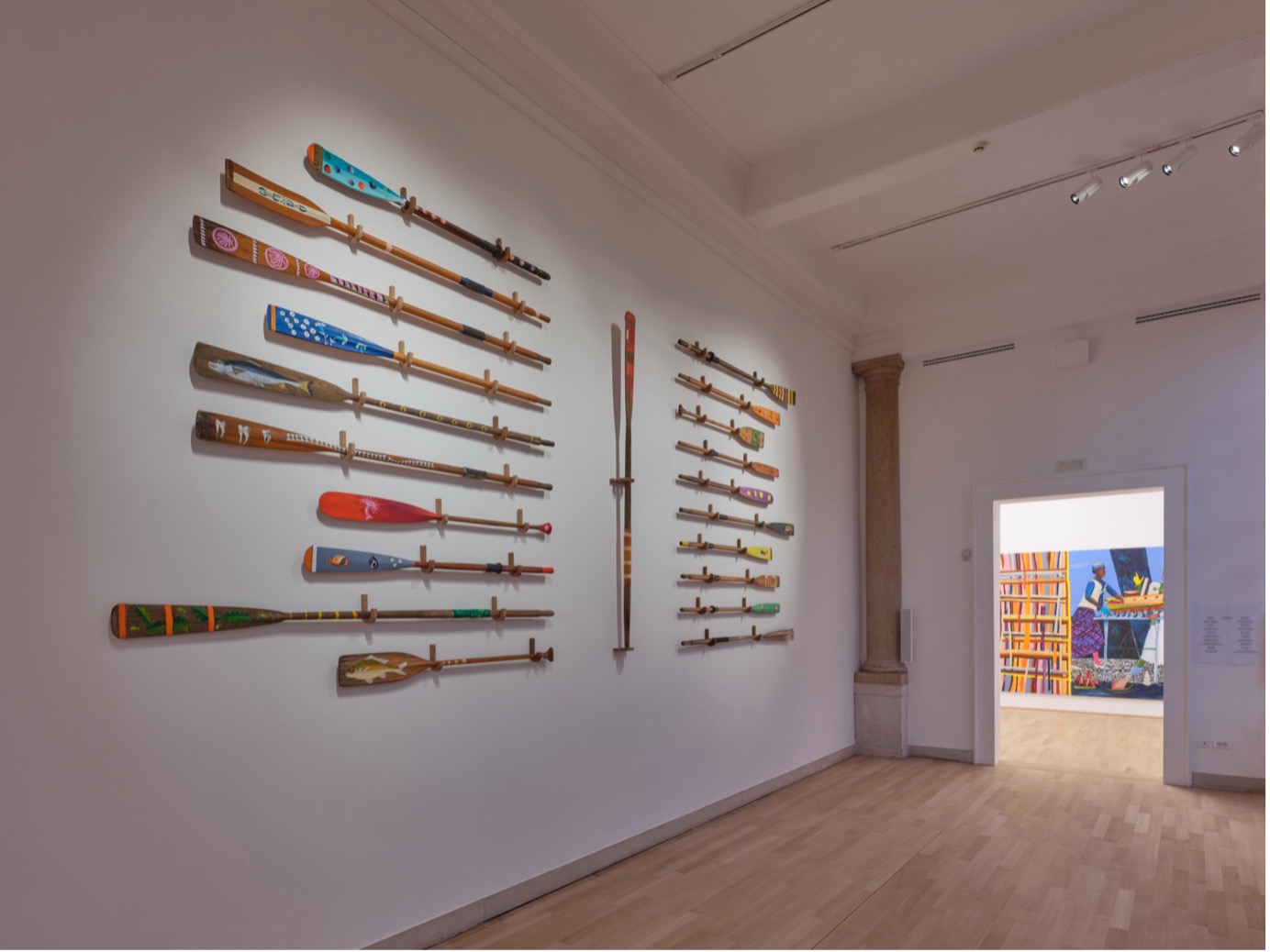
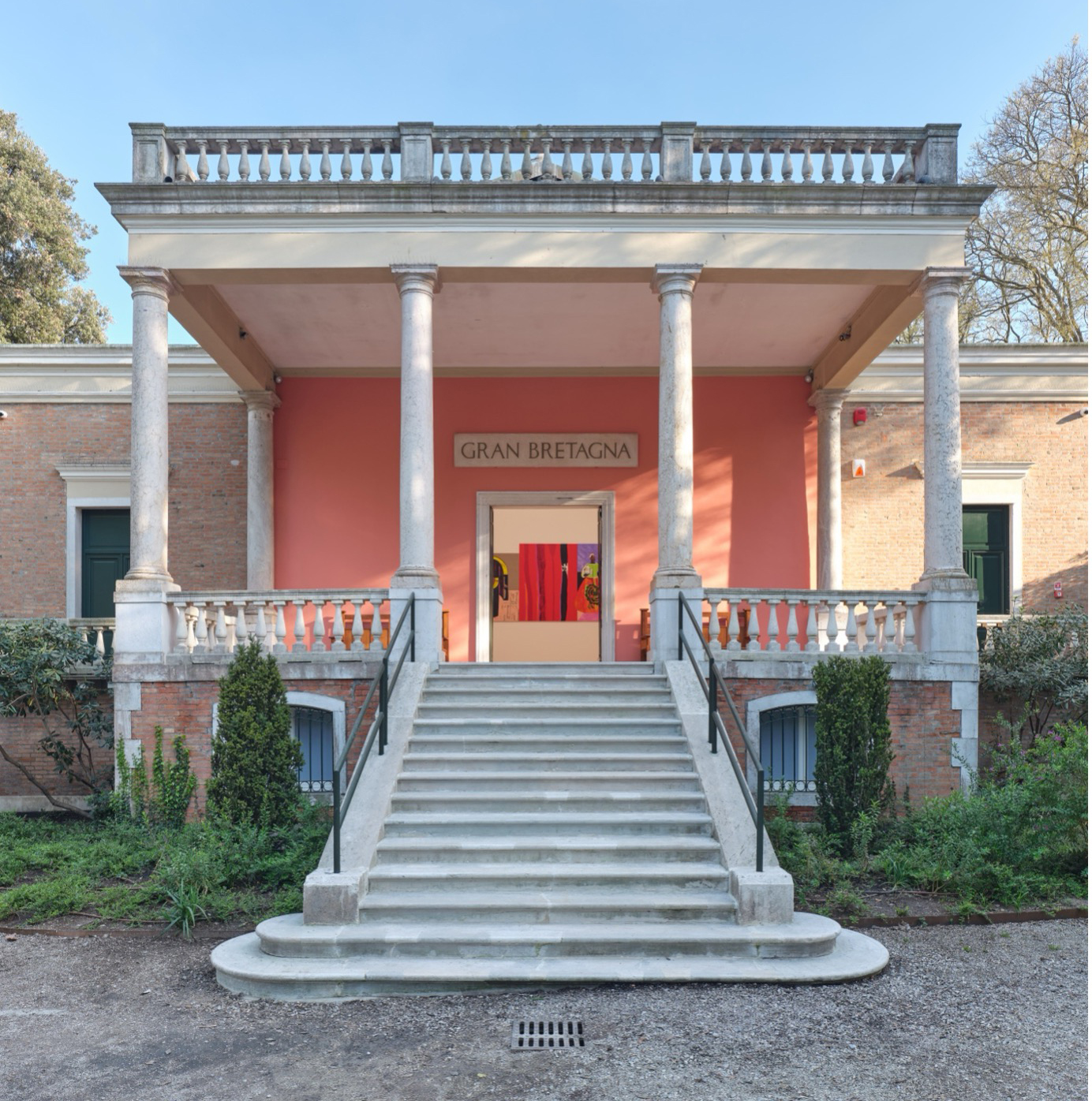
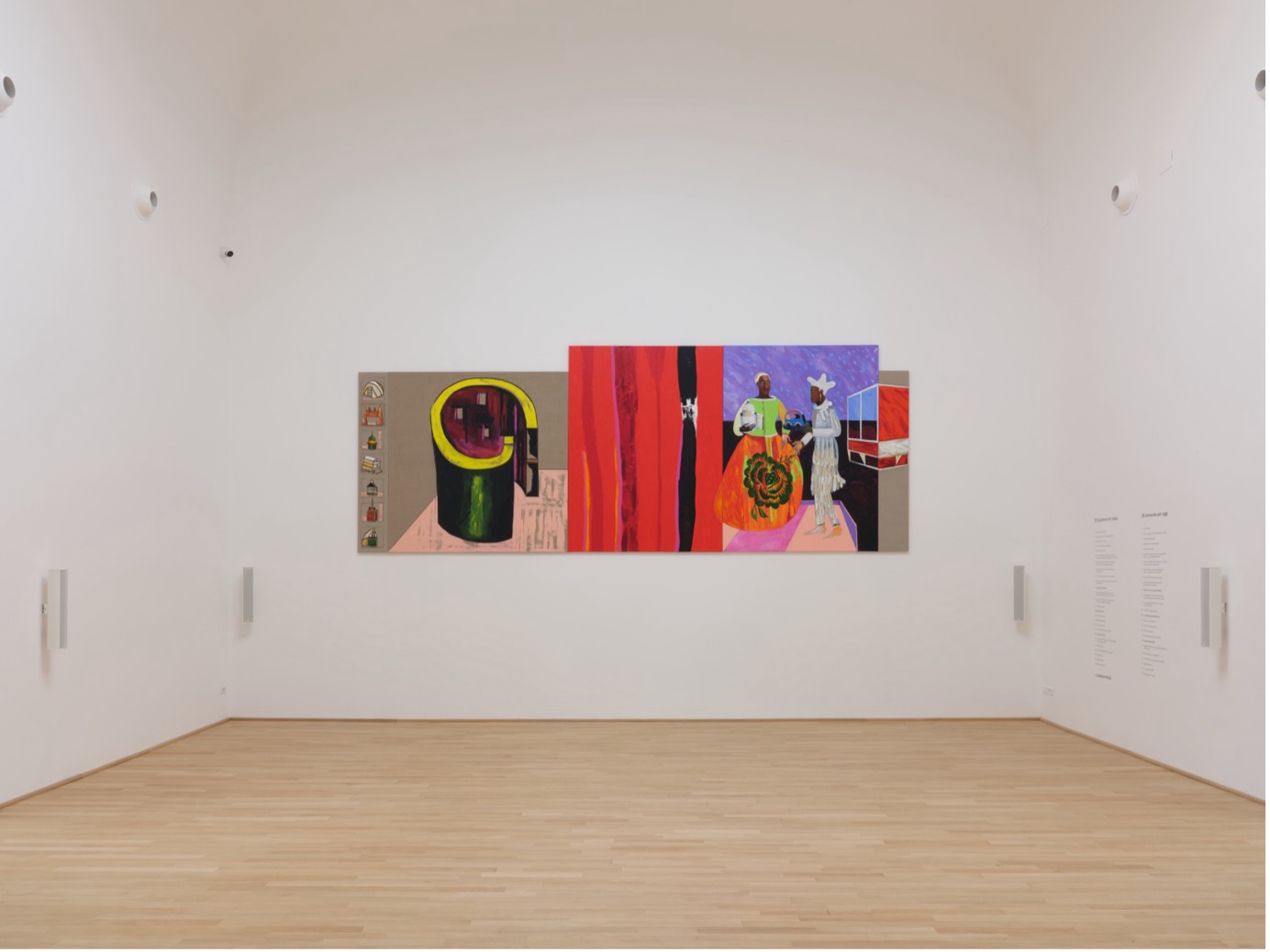
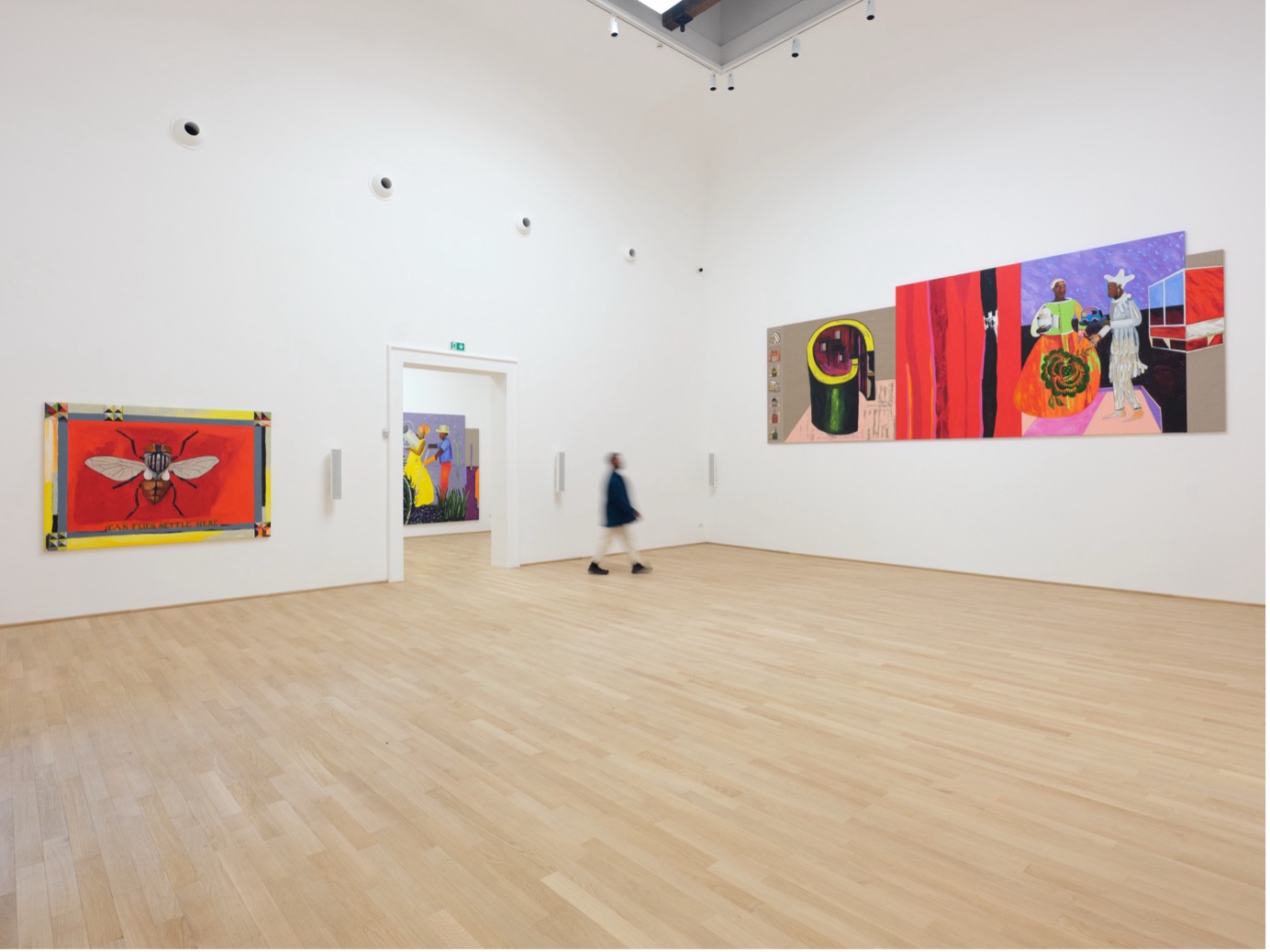
In this new installation, Lubaina Himid explores what it means to make a home in a new place. The exhibition brings together large-scale, multi-panel paintings alongside works on found objects, ‘kanga’ paintings, and a soundscape made in collaboration with artist Magda Stawarska. Combined, these form an immersive experience that questions what it means to inhabit a space not built for you, and to assert oneself in a world where some can move freely while others are ‘out of place’. The architecture of the British Pavilion itself serves as a symbol of the UK, while the exhibition combines sound, text and imagery to offer a layered exploration of place and home. Himid with Stawarska transform the galleries into immersive, multi-sensory spaces with a theatrical energy, encouraging visitors to engage emotionally with the characters in the work and their actions, as they would in a dramatic performance.
The idea behind the sound composition for Lubaina Himid’s installation, Predicting History: Testing Translation, is to create a soundscape of an imaginary construct of the British landscape. The sound is an integral part of Lubaina’s immersive installation, in which the architecture of the building, its location, and the light are taken into consideration, and all work together. Recorded rural places are layered with close-up sounds of bees, birds, and bells, moving in and out of idyllic soundscapes, shifting from serene to a feeling of unconscious unease. We hear a single bee passing our ears as I build the tension towards an increasing intensity of sound inside the hive.
Stawarska layered the ambisonic recordings of the countryside, already filled with birdsong, with additional trills, warbles and chirps (always using samples of birds that inhabit the British Isles or are at least summer visitors). The primary reason birds sing is to mark their territory, which in turn raises questions about home, belonging, and migration.
A beehive is another example of a home, a warm, safe shelter and a complex social structure. We fully appreciate and understand the vital role that bees play in pollination and agriculture, and how fundamental they are to the environment. Nevertheless, surrounded by many of them, we still feel frightened. We (L&M) play on the notion of the invisible threshold between safety and danger.
It is a 12-channel audio installation designed to flow through the Pavilion. Although the speakers are placed only in galleries one and four, the sound is audible from the side galleries two, three, five and six. There are two different environments, one landlocked in gallery one and the other in gallery four on the seashore. When the visitor is walking through the spaces, they blend together.
The sound is composed with clear consideration and understanding of the architecture. The copula ceiling reflects, making the birds sound as if they are above our heads. The recordings are captured with an ambisonic microphone to convey three-dimensionality in the gallery, and special software is used to add movement to direct sounds choreographed between the 12 speakers, creating an immersive experience.
The soundscape of the seashore is playing in the room at the back with a view of the lagoon. The front door of the pavilion is open, so the soundscape of Giardini comes in, mixing with recorded sounds and their reality, blurring the boundary between real and imaginary.The sound of a bell resonating throughout can be heard as a shop doorbell to one person, or a bicycle bell, a Morris dancer’s bell, perhaps, or even a warning like a plague bell.
Every 10 to 15 minutes, we hear the voice of Nana Mouskouri singing: Early One Morning. Her voice moves from the front door, slowly across the gallery one, and gently disappears through the side door. Standing in Gallery One, we can hear her through the wall, singing in the direction of the lagoon.
“Oh don’t deceive me, Oh never leave me,
How could you use a poor maiden so?”
The English folk song, sung by a Greek singer who released it on the album Songs of the British Isles in 1976, was chosen by Lubaina to illustrate the process of navigating unbelonging in the new place while remembering those left behind in the old place.
Nick Aikens, in his essay in the publication, says:
“Nana Mouskouri, the singer who hails from Greece and has released hundreds of albums in a dozen languages, was singularly adept at moving between place and placelessness. Her 1976 version of ‘Early One Morning’, the eighteenth-century English folk song, forms part of Stawarska’s soundtrack, which moves from the front to the back galleries of the pavilion, like a wave passing through.”
Each visitor will bring their own memory and their own experiences to the installation, and the layered soundscape will conjure different images and associations for each of them.